I have travelled extensively and many times people ask me which is my favourite country. It is really hard to make a choice as each and everyone has a different and distinctive element that has made me choose it for one of my travels. However, Namibia has been one of the best for quite many reasons.
When I arrived there I really did not know much about what to expect. Upon arrival I started a flying tour of the country. We were a very small group of people with a relatively strong adventure streak and took a small plane where the pilot was at the same time the pilot, porter, guide, advisor and also put petrol on the plane when needed. Overflying Namibia is overflying vast expanses of desert, mostly reddish desert where you see a town every now and then. We overflew salt fields, mountains of salt, machinery and where people did not look as much.
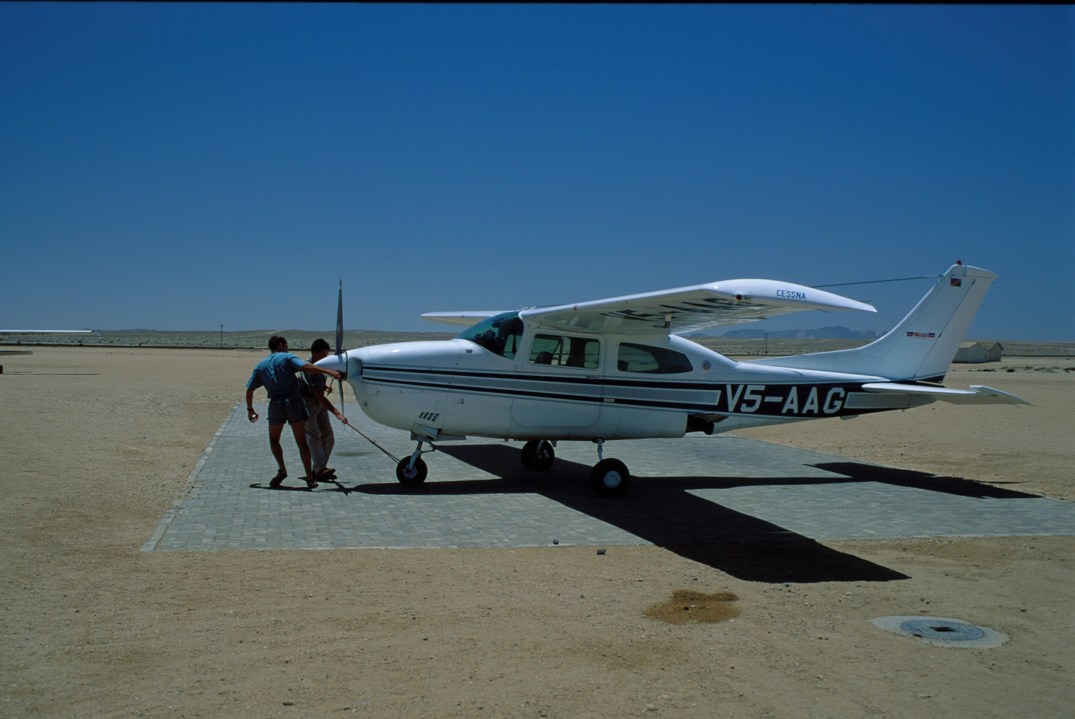
When we arrived at the Skeleton Coast there was no bone to be seen, of course. The name is due to the skeletons of ships that have ran aground along these coasts. The sea is rough and the winds are very strong so I guess when a storm blew, it took along most of the boats and ships that were in the area. There was no hotel as such; there were little huts planted on the sand, solidly so, where you could seek refuge in case of storm. We ate fish, of course caught by our pilot cum fisherman and cook. Then we continued our flying safari and went somewhere north, into a stretch of desert full of dunes of different colours where the tents were fixed and very well provided, but where we had to walk some distance to the showers. The showers were just four flimsy walls and a bucket of water. No “running water” but because it was hot and sunny, this openness was welcome. You had to shower fast to make water last, and if you needed to wash your hair, better do it with little soap that did not foam a lot.
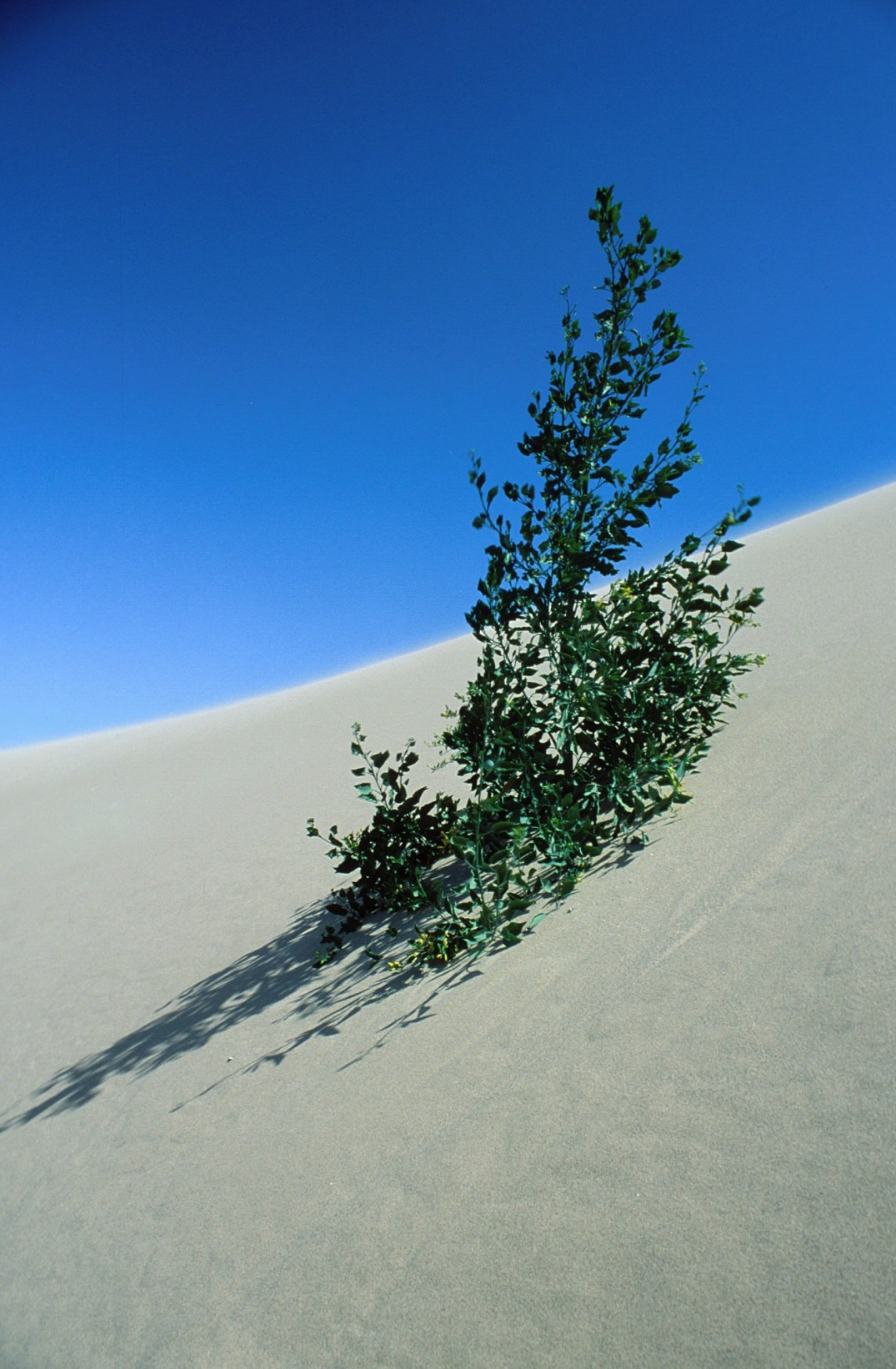
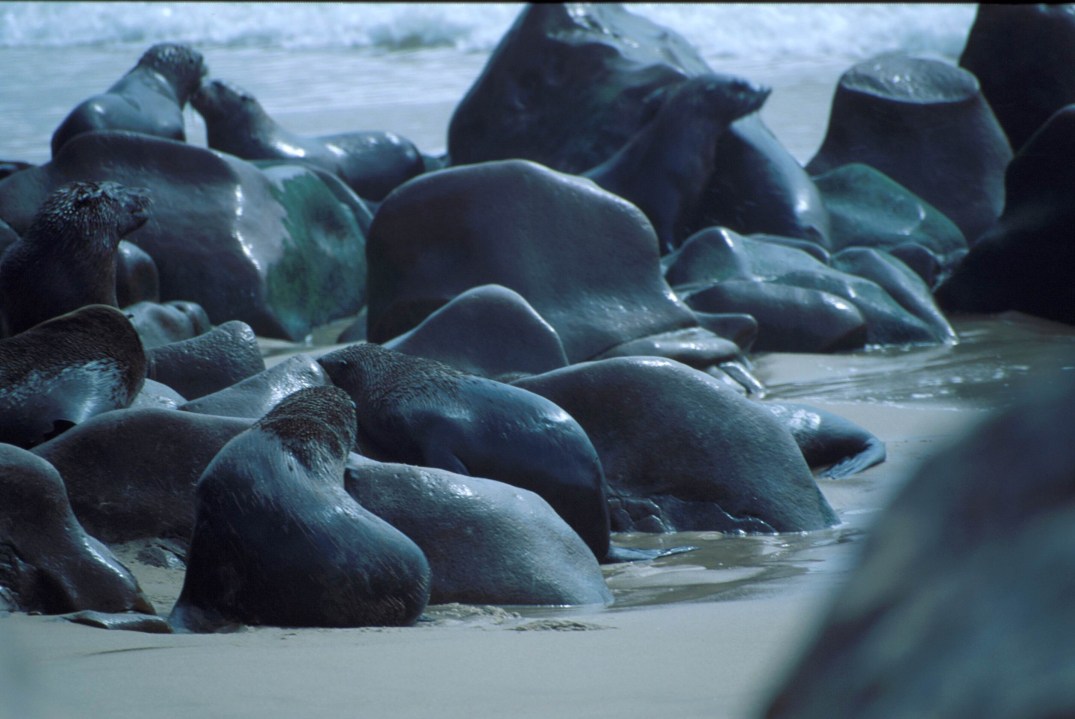
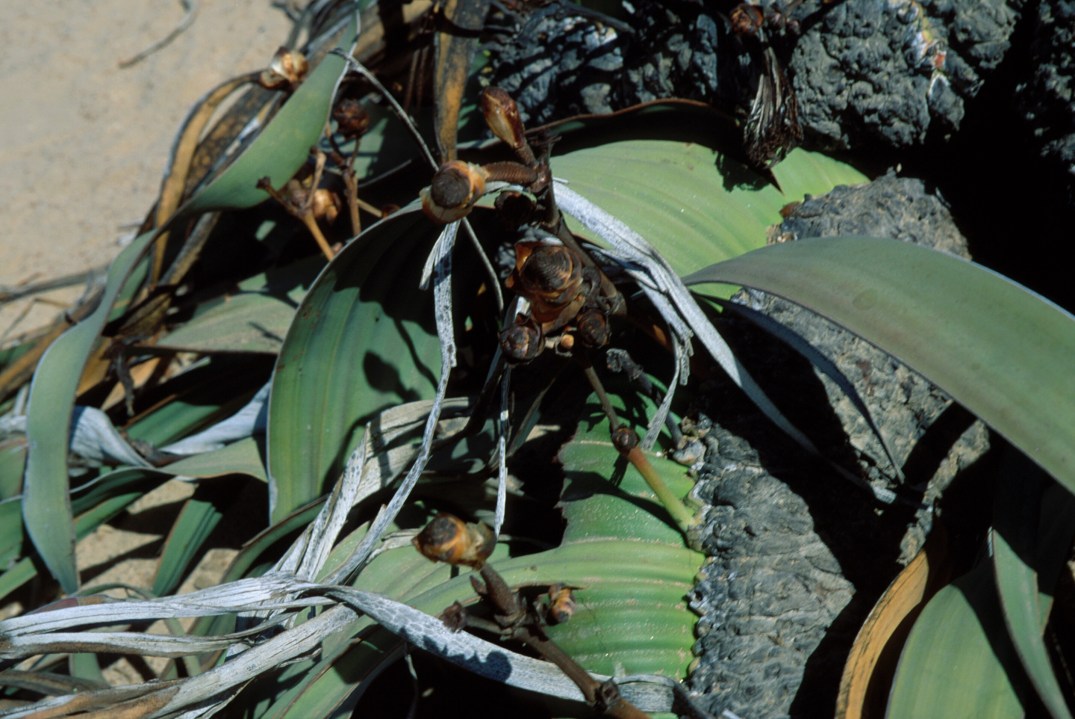
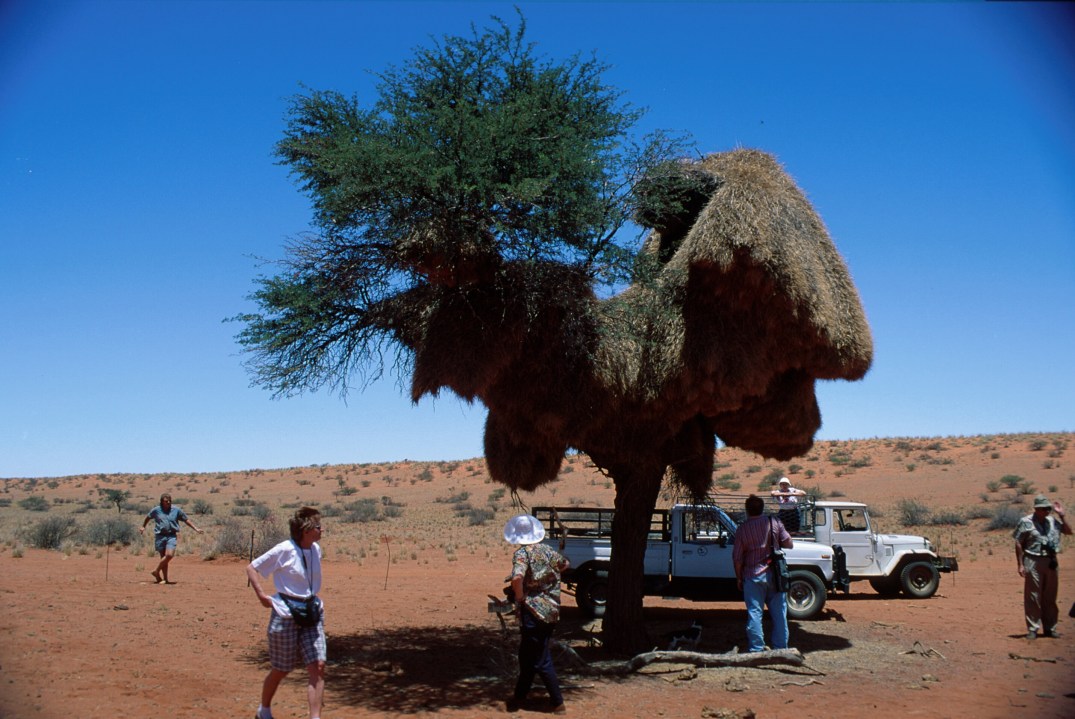
The colonies of seals and sea lions were huge and noisy. I guess one of the things that struck me most in Namibia was the size of things or more exactly the proportions. Coming from a big country like Mexico, I should not have been surprised but I was when the animals on the beach extend almost beyond the limit of your sight and when the dunes are as high as mountains, where there is one tree alone and isolated in many hundreds of meters. Plants that can live for hundreds of years without water look like dead but the moment they “smell” water they come back to life and in a matter of hours return to full bloom and green. I know this is nothing new, but it was to me as were the contrasts and the variety that struck me most.
We visited a town, a real one, called Swakopmund that was like a trip back in time. The houses and the layout of the town were sooo German and even the white settlers dressed the part, and I was told it was like that everyday, not dress up for the tourist but that was their tradition. Namibia had been a German colony and in many things it kept the order and discipline of the former colonizers, but with the African touch that probably for me is what made its charm.
After the flying safari I took a tour with a tourist bus, our driver had been a pilot with the SA air force but when that finished moved to Namibia and took us, tourist around. He was incredibly good looking but unfortunately for me kept his distance, so it was what we call a sight for sore eyes but nothing more. He was nice, well read and knew a lot about the country. In this tour we went mainly to the south of the country, where the land is still red, the vegetation scarce and the houses far apart. I live in Switzerland, where the moment you get out of a town or city you see either arable land or cows, many cows together, peacefully grassing and making milk and or muscle. There are many cows per square kilometre. However in Namibia we were told that there are cattle, but because of the arid land, they have in the ranches certain number of square kilometres per head of cattle. Imagine that for one head of cattle to survive in the wild, they need several hectares of land, so scarce is the grass.
Travelling along the country our guides explained that the desert has different colours, gray, beige, black and deep red, depending on the composition of the sand crystals but all of it is hard and quite compacted, so the trails of the roads to go from one place to another are well marked and have to be respected. One car print out of the road will remain as a scar to the land for many years; the winds can cover them but not erase them so be careful where you put your feet.
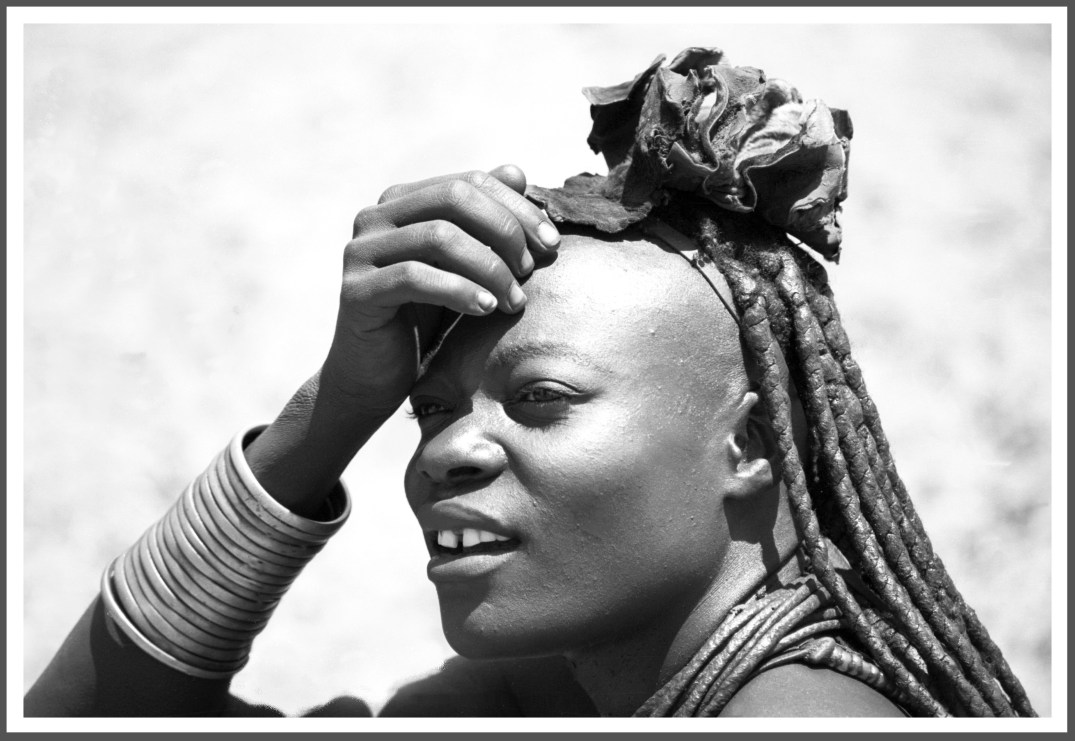
We visited a settlement of the nomads of the Namib, we saw mostly women and children with a fantastic skin and their hair was braided using some kind of animal fat and the ochre earth, it looks like a solid cask and I wondered how it must feel in the heat of the place. I have a head that perspires a lot and just the idea of putting this kind of product on it makes me feel like scratching mad, but they did not look the worse for it, quite the opposite, it gave them all an air of beauty.
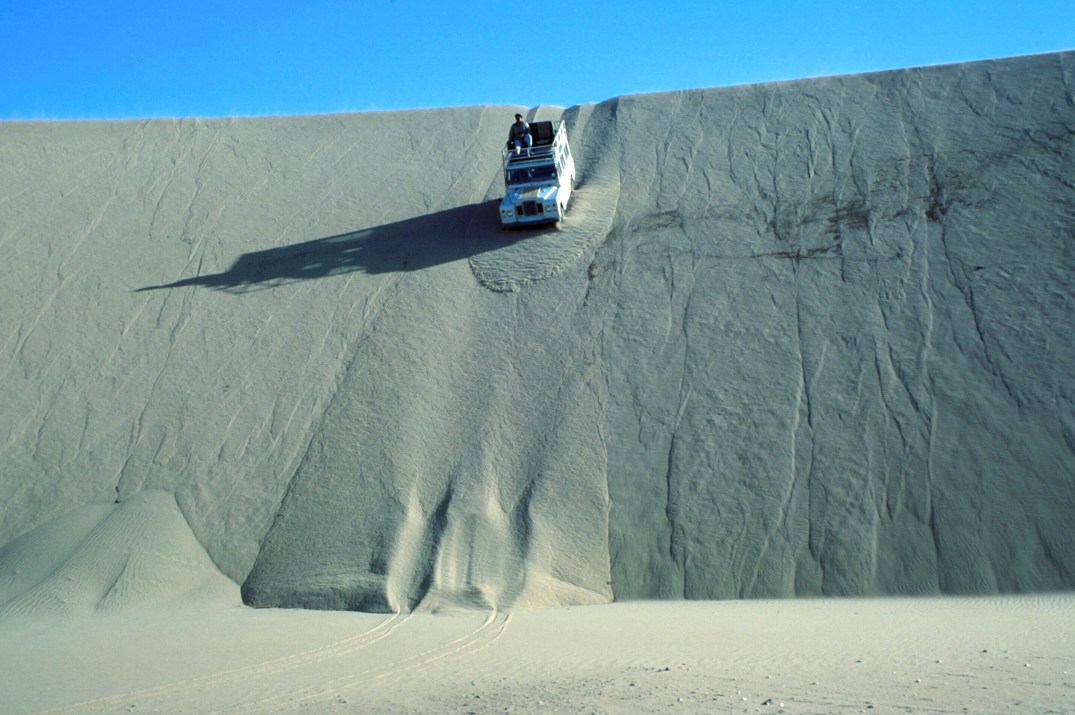
Another stop or drive more exactly that was impressive were the Singing Dunes. They are relatively high dunes that on one side have a very steep slope so the idea is to arrive to the top with a 4-wheel drive and descend on the steep slope making an incredible sound like singing or crystal bells ringing!!! If I had not experience it myself, would be unbelievable. No other dunes, to my knowledge make such noise. The guide told us that the reason is because all the grains of the sand have exactly the same size and shape, so when there is friction they make this tingling sound. I do not know if it is true but it was a fantastic feeling and also sliding with the car down the slope gives you an adrenaline shot!
When I arrived in Windhoek, capital of Namibia, I did not know anyone but had the name and telephone of a lady that worked for the UNDP there, just in case I needed some help. So upon arrival I just called her with greetings from Geneva and she kindly invited me for a coffee and during the conversation also invited me to the cinema, with some of her friends. I gladly accepted the invitation and we fixed a rdvz at her office. I did not really know the film but she highly recommended it, so there we go, five young women, all black and myself, white despite the suntan due to the safaris. All this happened in 1992, and the political world at the time was not devoid of racial tensions in Namibia. The movie was with Whoopi Goldberg and I more or less remember it had strong racial connotations of the abuse of white vs. black, and not even in Africa but somewhere in north America. The film heated the spirits in the room and there were expressions of anger and frustration, nothing extreme but still some rather frightening reactions. Finally the film ended, the lights went on and we were leaving the cinema when I realized I was among the 5 or 6 white people there, all others were black Africans, probably Namibians, and fairly young. Their anger, freely expressed on the topic of the film became a bit scary and I not being extremely courageous wanted to disappear or change the colour of my skin. I had not been exposed to racial hatred or dislike before and did not like it; this was just because of a film, what if it was for real? The ladies were very pleasant and commented freely on their anger about the situation. I could only keep quiet, did not want to upset my newly found friends.

This and more make Namibia one of the places I would like to visit again. The contrasts, the differences and all together the country makes it for me one of my favourites. If you want to see some more of Namibia, look at the photos in this same blog. Hope you enjoy them as much as I have.
 Mementos of my life