The town of San Juan Chamula is located about 10 km from San Cristobal las Casas, and it is unique in its political governance, since they do not accept interference or impositions from the State government, nor in police nor military matters and basically in nothing at all, self-governed and apparently very well done so.

If you have been to San Cristobal you already have an idea of who are the chamulas and tzotziles, their dresses, customs not to mention their languages, which are for us Spanish speakers as complicated and alien as old Chinese.
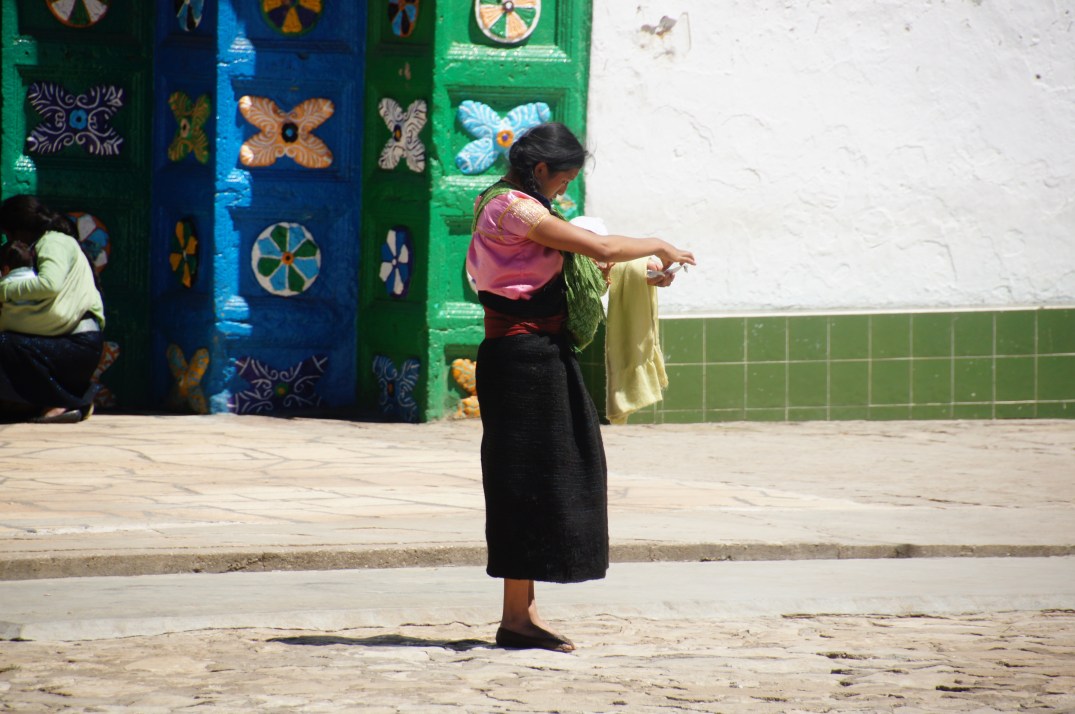
In San Juan Chamula the main centre of attraction is the church, relatively small, with whitewashed walls but all the lintels of windows and doors and the bell tower are painted with a very bright blue and green pattern that cannot be missed. To go in, which is the main purpose of the visit to this town, and unlike most other churches I know, you have to pay, but payment must be done at the town hall, where you get your entrance ticket and the very stern warning that cannot be mistaken for a joke, that it is absolutely forbidden to take photos inside the church. True that in some digital media you can find now photos of the inside, but nonetheless they must have taken cheating the prohibition.
At the door there is an old lady that, just in case you missed it in the town hall, repeats in no uncertain terms that it is prohibited to take photos inside, that they are watching and should you be caught trying to trick the situation, they will take your camera, phone or whatever you are using and will destroy it. No Photos means NO PHOTOS whatsoever.


Details of the entrance door and main balcony of the church
Finally you can go in and it is so different from any other church you can think of. For starters there are no benches or seats whatsoever, the floor is covered with pine boughs that give it a beautiful ambience and pleasant smell. No electric lights at all and the number of candles is incredible, every nook and tiny space is full of them and all the walls are literally covered with statues of saints and various denominations of the virgin, and al of them with mirrors of various forms and shapes that serve to repel curses and bad ideas or feelings. We were told that although the statues look like to Catholic saints, they really represent the Mayan gods and divinities. This would not be the only instance when the indigenous cultures used the images of the catholic saints to trick the monks and preachers into believing they had converted the Indians, while they kept their own traditions.


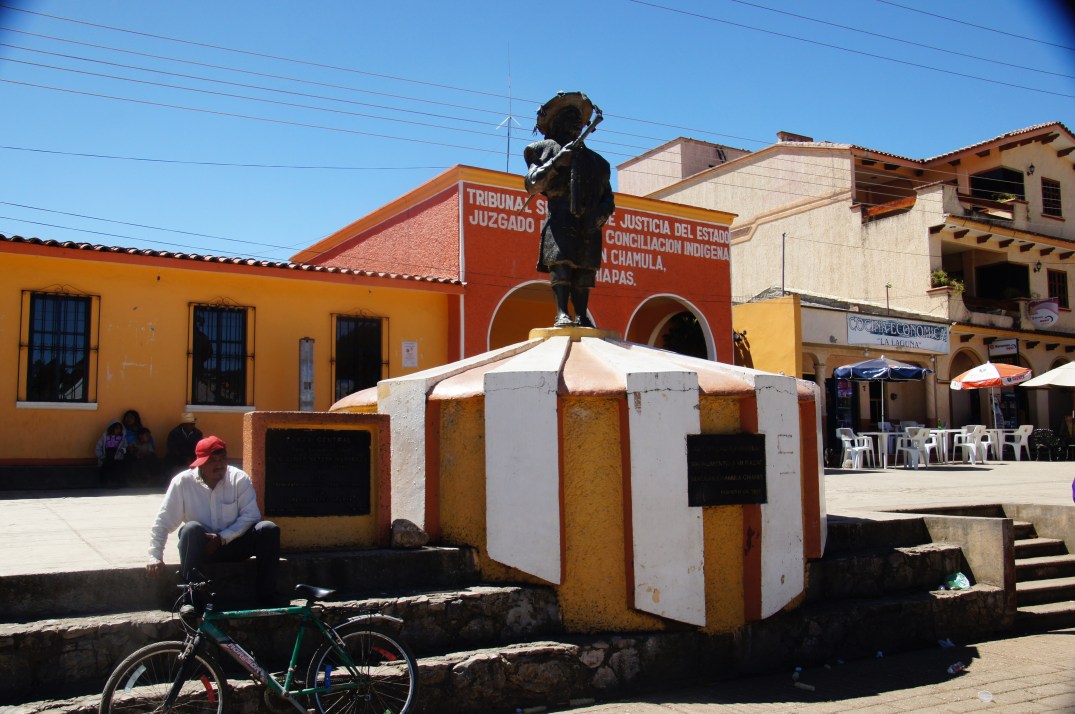
Old cemetery and church, and main square in market day
There are many visitors, mostly worshippers, all carrying packages of various sizes and forms, presents and offerings that may go from a little plant to a chicken, live of course to be left there and bottles of drinks that can go from a cola drink to strong alcoholic beverages. There are some healers and “advisors” waiting for the worshipers that may need them or their guidance. It is as a whole a very strange mixture of old Christian traditions, shamanism, pre-Hispanic beliefs and theatrical representations in part for the locals and also for the tourists that listen to the stories of the guides in rapt attention.


The church
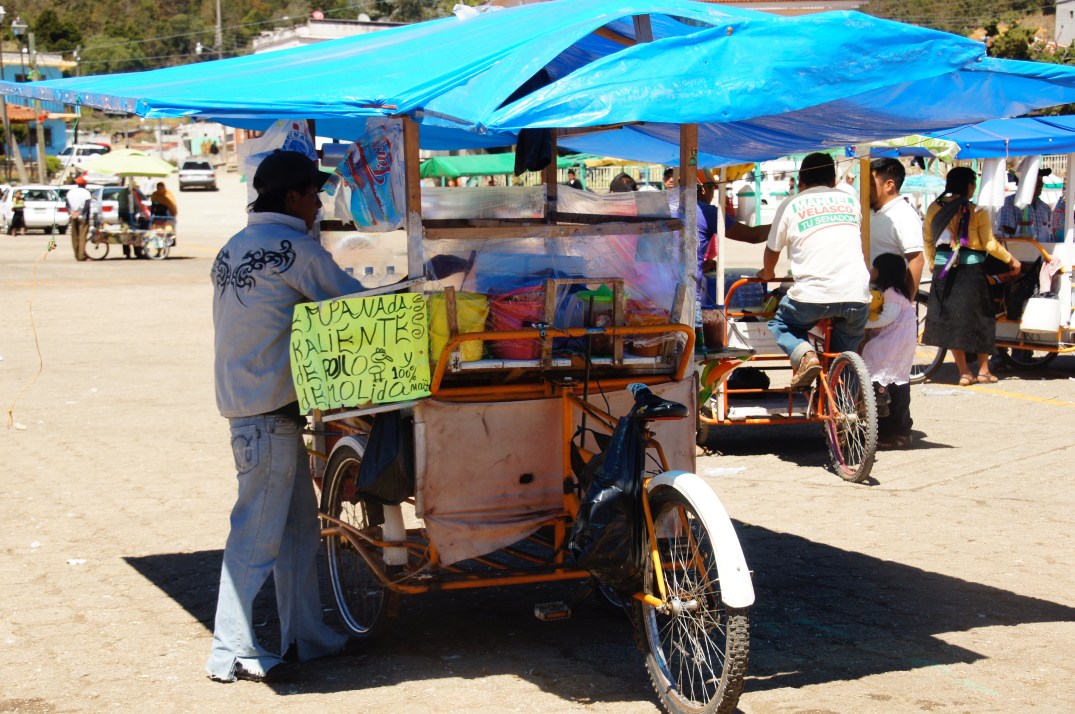
When I left the church it I was with a strange feeling of having participated in a different ritual, full of strange beliefs and being under the protection of those saints/deities as long as I did nothing to offend them. Outside the church you find the usual vendors of food and trinkets that mostly speak their own language, Totzil and where mostly the children or young people can also speak Spanish for the benefit of us tourists. It is a strange feeling, being an interpreter myself, to be totally dependent of a colleague, but many many years younger, to understand and make myself understood. Somehow you finally grasp the usefulness of your profession, albeit limited even then.
 Mementos of my life