Over 25 years ago I went to where for me was and still is a country full of mystery and very different ancestral costumes than mine.


All the written information I could gather told me that Papua New Guinea was a country that still lived in the mud age, in comparison to where I lived, full of concrete and glass. That does not make them backward, just different and the fact that in general terms I knew so little about it made me even more curious to go. When I told some friends my future destination, one of them, my dearest friend Urs even offered to send in advance some carrots and potatoes for the soup, the soup in which I would be the main ingredient as it has been said that in the past the Papuans had been anthropophagous.

I am still alive and kicking, so at least the people I met did not enjoy the idea of having me as the main dish or else they were on a low-cholesterol diet and did not want to hurt their arteries!


Head gear made of feathers, sweet mint flower and Huli warrior
The capital city, Port Moresby was like any modern city, with some skyscrapers, concrete and glass, but the moment you left the city and went into the smaller towns all changed. The mode of transportation other than the plane for long distances was either your own two feet or canoes and jeeps in good but rudimentary roads. I would imagine for the Papuans, the main mode was either walking or canoeing as the country is criss-crossed by many rivers.


Tea plantations in Whagi Valley and a Papuan couple
When I went to Mount Hagen by plane, but before boarding I had to be weighed to find me the right seat in order to keep the plane stable and balanced! What a horrible feeling, especially because the suitcases were not subject to the same indignity, you could carry an elephant in your suitcase, not that there are elephants in PNG, and none the wiser, but I had to be weighed. I was subject to the same process every time I took a plane and even on boarding a canoe, the master of the ship looked at the passengers to reckon where and how. Most Papuans I met were rather slim and not very tall, so I guess it was for everybody’s safety but…


Preparing the Sagu for lunch
Mount Hagen was and I believe it is still the second most important town in PNG with many shops and restaurants, mostly for the locals as at the time there were not all that many tourist – or they had already been disposed of and become part of the menus? One day I was wondering in town when shots were fired, where from and where to I do not know but I suddenly realized all were running like headless chickens and I was somehow kind of alone in the middle of the road. I of course wanted to hide, but in most of the stores they had closed the security curtains and would not open them only for me. One was in the process of closing so I shoved my way into the shop and all was fine, some time later all became calm again and I was let out, with the admonition of returning to my hotel and stay there at least for the day.
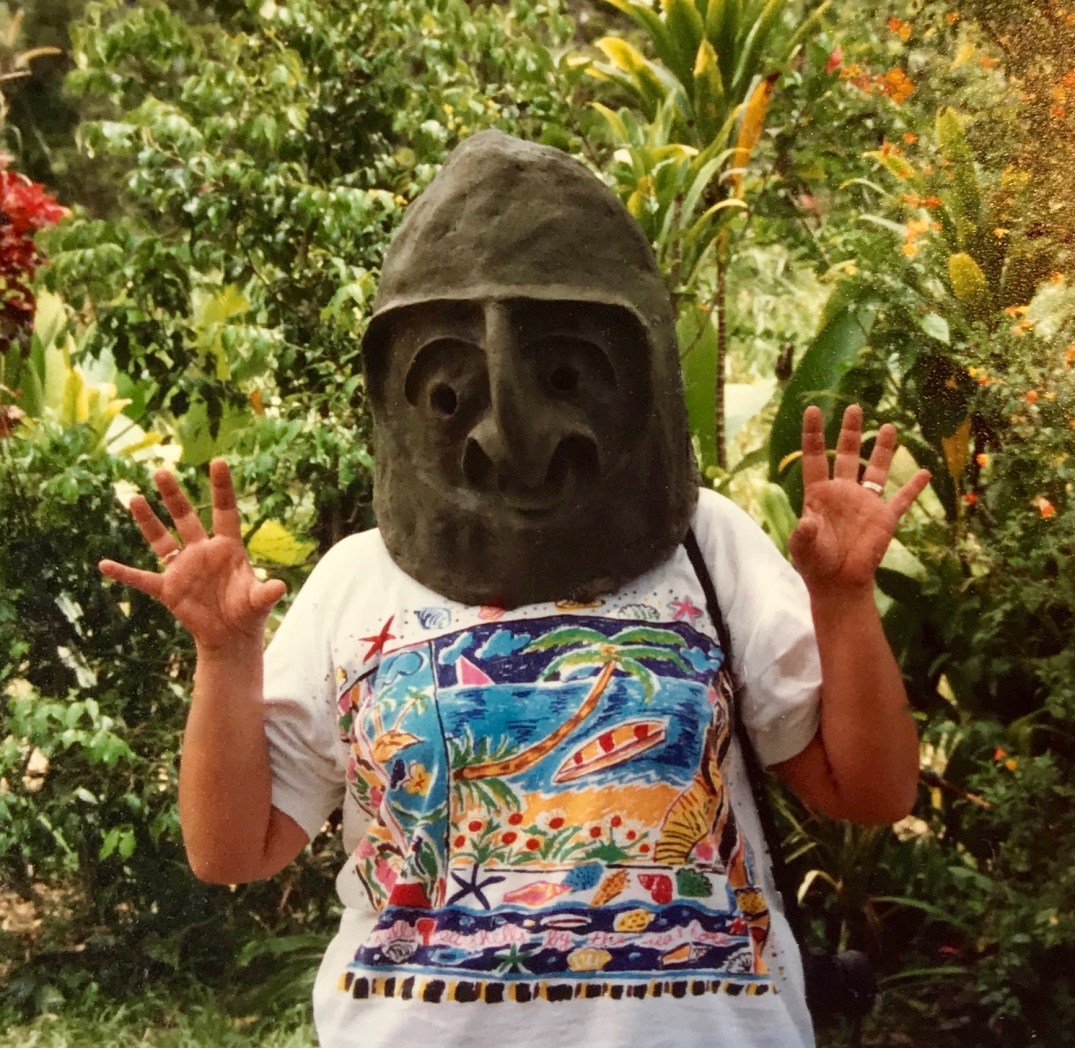
On the first days we visited a mud-village in the Whagi Valley, where they offered shows for tourists, wearing mud masks when the idea was to scare the villagers, but the women of the village defended the place. If I had been a villager, seeing those bad spirits of course I would be scared, and when I wore one I can tell you it was also scary to be inside, very hot, stuffy. The show continued, they explained in gests some parts of their traditions and culture and it was great fun. Bones are used as decoration of their houses and masks and feathers and flowers are integral part of the make-up wore by all, and like in many parts of the animal kingdom, the men’s make-up and head gear was far prettier and elaborated than the women. So be it, the macho world even in ancient cultures!


Mudmen and mudwomen
Next stage was the Karawari River and for that we had to fly over the central and western mountainous areas, PNG is mostly mountains and lots of rivers. In the Karawari river area the houses are built over piles so that they can avoid flooding and also protects them from certain predators such as crocs. We attended several representations of their traditions, which allowed me to notice that we may be in the antipodes one from the other but basic celebrations such as marriage, birth, death and partaking food have a considerable number of similarities. Dresses and spices may differ, but the concepts of togetherness do not. I guess war also is similar, fought with different arms but seeking the control of the opposite faction and doing all that is possible to achieve it.
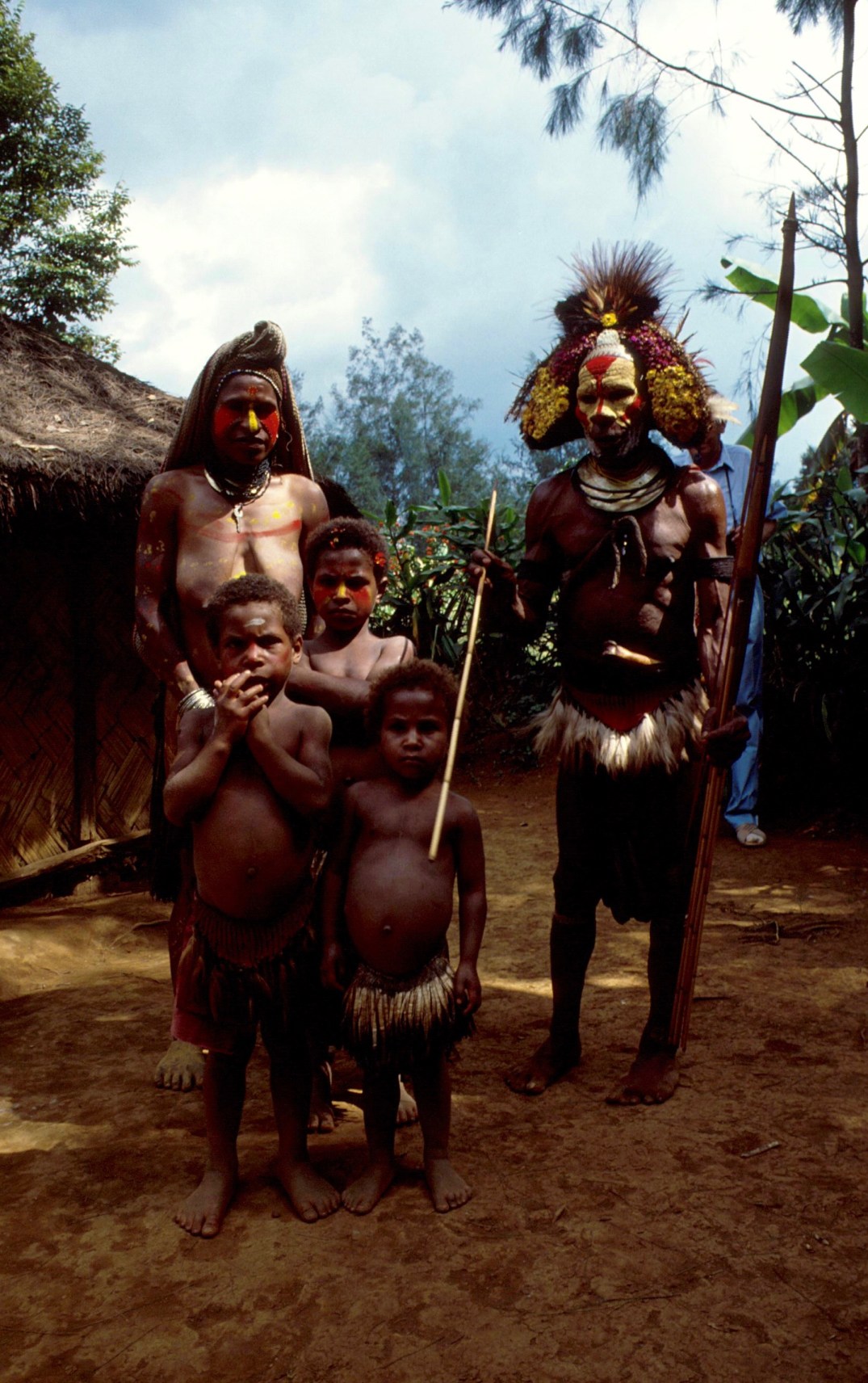
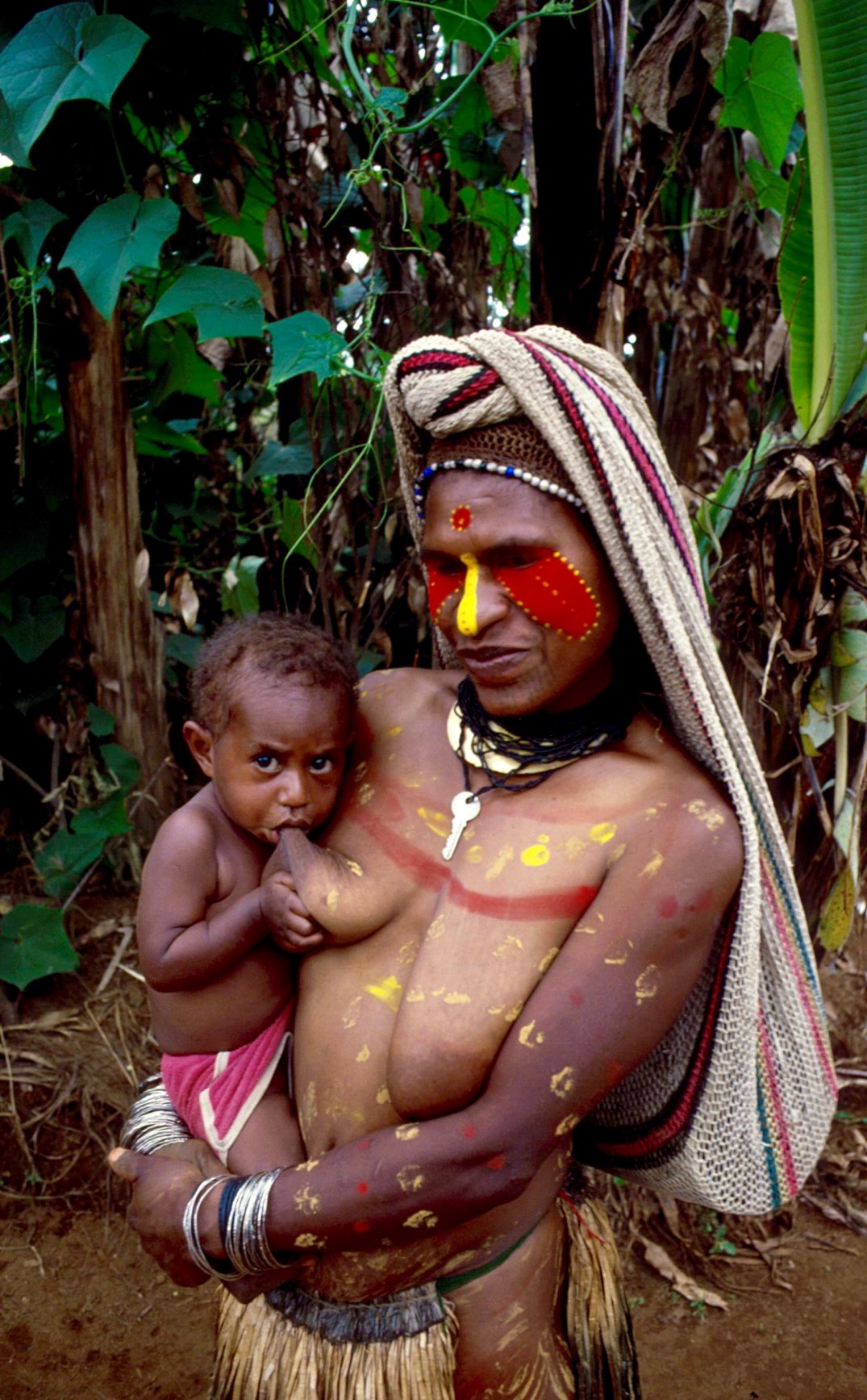
Next stage was the Tari Valley, which is the home of the Huli people, renown for their extraordinary wigs and make-up using mostly the feathers of the very abundant wildlife. We were shown how they make their wigs and how men make themselves beautiful and colourful. Again, the male of the species tries to look the best.


Huli men preparing their wigs and make-up
I had never visited a country that could be described as primitive as this but that offered life and colour to their population, that was rugged as their land but also could be pleasant as their rivers and that did not seem to need the carrots for the soup. I am living proof of that!


Kiribati river
 Mementos of my life
¡ Caray !
LikeLike