
The state of Oaxaca is located in the southwest part of Mexico; it is a big state, very rich in culture, crafts, colours, cuisine, and people and in my opinion very poor in good governance, which is a pity as the main victims are the children. For many years now, the teachers under the sad control of a very corrupt and abusive teachers union have used any possible excuse on the book to cancel classes and protest for whatever they consider is wrong, without realizing that what is wrong is leaving the children without education, the only thing that can help them improve their lives and their future. This is my personal opinion that may or not be shared by others. Unfortunately it seems the government – local and federal – is not decisive enough to take action towards stopping the abuses and increasing the welfare of the children and of the population at large.
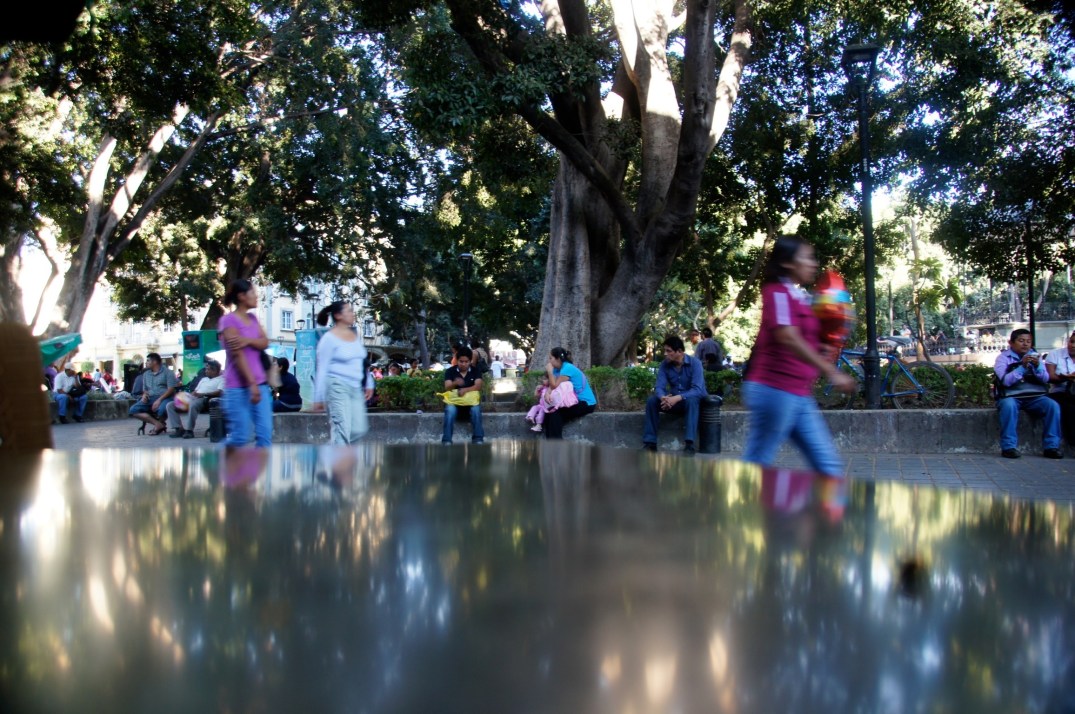
The city of Oaxaca, capital of the state of the same name is very beautiful, it has a central square surrounded on one side by the cathedral, big and majestic, and on the other sides by old colonial buildings, only one story high, that today house some government offices and for the most part restaurants and shops. In the middle is the zocalo or central square that is a very beautiful garden, full of trees, with benches and in the middle a rotunda where music is played during the week ends and also used for dancing or political meetings. The ambiance is always colourful, families strolling in the late afternoon, before going home for dinner, and of course the eternal tourists enjoying the views, the smells, the sounds and the multiple sellers of arts and crafts of all kinds, hats, embroidered dresses, jewellery, toys, balloons, necklaces makers and many other trinkets and of course food, delicious food.


I have visited Oaxaca several times and always had a great time. The last time I was there I started chatting with some ladies that wanted to sell their handmade and home made necklaces of various colours and kinds of beads. One thing led to another we started chatting about who did the necklaces, and they told me their story, that may be similar to many of the sellers regardless of what they offer. Usually the patter familiasworks as labourer or in agriculture, not really as landowner but as hired hand, the earnings maybe sufficient for basic living, but not for any extras, so the wives have to find the way to contribute to the family budget by making goodies that can be sold in the markets or squares or tourist areas in general. The young women I talked to had at least two children, and while their kids were at school, the lucky ones that had classes, they were in the zocaloor other tourist areas, trying to sell their wares. School only lasted either morning or afternoon, so if the kids were at school in the morning it meant that mothers and kids had to be home in the afternoon, doing homework, housework and preparing the goodies for the following day. The work is hard and it takes relatively long time to make a necklace, they have to have all the different beads, mostly dyed seeds of various kinds, of different colours or else they specialize is leathery goods or orange peel which is also used to make jewellery, they also have to dye them, and be careful not to waste anything. Add to that keeping the home in order, the meals on time and life is not easy.


Despite the hard work, they seemed to me cheerful, chirpy and mostly happy. Their necklaces, pottery, shirts, dresses, balloons and most other goodies have a range of colour that is amazing, where just the look of such array of diversity makes you happy, when the piggy banks come in so many different colours that it is a pleasure to fill them with coins, where dresses and shirts have such beautiful embroideries that is like walking with a garden on your shoulders, where the food smells good and tastes better, clean and fresh. The balloons, many of which have “westernized” shapes have very Mexican colours, where you can see shoe shiners, cleaners and musicians together, having a good time and in general seem to be enjoying life. Life is not easy for most of them, but they seem to enjoy as much as possible.


The food in Oaxaca has a diversity as big as the colours of the rainbow, the famous moles, also known in some English speaking countries as the Choco sauce because of its colour and because in some or all of its recipes, contains the famous Mexican chocolate. Mole comes in different colours, you can find it black, red, green, with almonds, without, with sesame seeds, and in the traditional enchiladas, in Oaxaca it is served without sesame seeds, but with fresh onion rings and cheese, and then if you put a bit of crème on top it is called Swiss, reminding the invitees of the snow capped mountains in Switzerland and also this way it mellows the sharpness of the mole. As a sauce, mole can accompany chicken or turkey, pork or be a vegetarian dish, when served with chopped cactus leaves, they are then described as swimming cactus leaves.


Another delicious food are the breakfast sweet breads, many of them are traditions dating from the times of the colony, like the conchas, timbales, roscas de manteca or the well known bolillosand teleras, the last ones salty white bread that can be used to make the traditional tortasfilled with any imaginable savoury filling, from ham and cheese to tamales, mole, sauces, meats and whatever fancies your imagination. All delicious and quite filling, which in many instances is their main purpose as they are staple food for many that cannot afford big main dishes.


Oaxaca also hosts famous and beautiful archaeological sites representatives of the Zapoteca and Mixteca cultures such as Monte Alban and Mitla, which in themselves are worth the visit. Also a point of interest is the impressive Tule tree on the road between Oaxaca city and Mitla. It is an Ahuehuete (in Nahuatl), huge tree 41 meters high, 42 meters in circumference and 14.4 meters in diameter. You need a good number of people to embrace it and its age is estimated between 1200 and 3000 years. All the stories this tree could tell us, but it is silent witness of history and life, providing shade and protection and hopefully keeping an eye on the great people of Oaxaca.


 Mementos of my life